Package - Domestic Tour Package

Book travel packages and enjoy your holidays with distinctive experience

TOP Domestic packages

Customized Tour Plan

Forest Tour

India is home to a diverse range of forests—moist and dry tropical forests, temperate and subtropical montane forests, alpine forests and scrub forests. It is one of the 17 “mega diverse” countries and is home to 8% of the world’s known flora and fauna. In addition, Indian forests support the livelihood of nearly 275 million people, who are dependent on forests for food, fuel wood, fodder and other forest products.

India’s first national park was established in 1936 as Hailey National Park, now known as Jim Corbett National Park, Uttarakhand. By 1970, India only had five national parks. In 1972, India enacted the Wildlife Protection Act and Project Tiger in 1973 to safeguard the habitats of conservation reliant species.

Further federal legislation strengthening protection for wildlife was introduced in the 1980s.

There are 104 existing national parks in India covering an area of 43,716 sq.km, which is 1.33% of the geographical area of the country (National Wildlife Database, Dec. 2020). In addition to the above 75 National Parks covering an area of 16,608 km2 are proposed in the Protected Area Network Report (Rodgers & Panwar, 1988). The network of parks will go up 176 after full implementation of the above report.

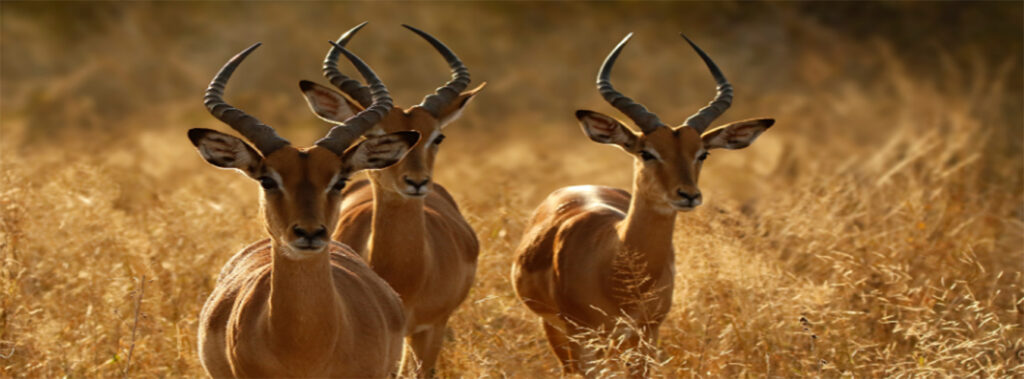
WILDLIFE TOURISM is gearing up in India and is obtaining global recognition. From Asian Elephants to Asiatic Lion, Bengal Tiger, Sloth Bear, Indian Rhinoceros and Leopard to hundreds of bird species, tourists from all across the world are attracted to visit the country. Also, the increasing publicity by tourism boards coupled with improvements in facilities for tourists has attracted more travelers within a short span of time.

Nature-based tourism consists of experiences dependent on the natural environment, for example visiting wildlife parks, hiking, camping, bird watching, and scuba-diving. In India, this is a rapidly growing industry, with park visitation increasing annually. Such tourism is considered valuable for conservation and local economies as it generates funds for park management and provides employment. However, this may not always be true in practice.

Uttarakhand

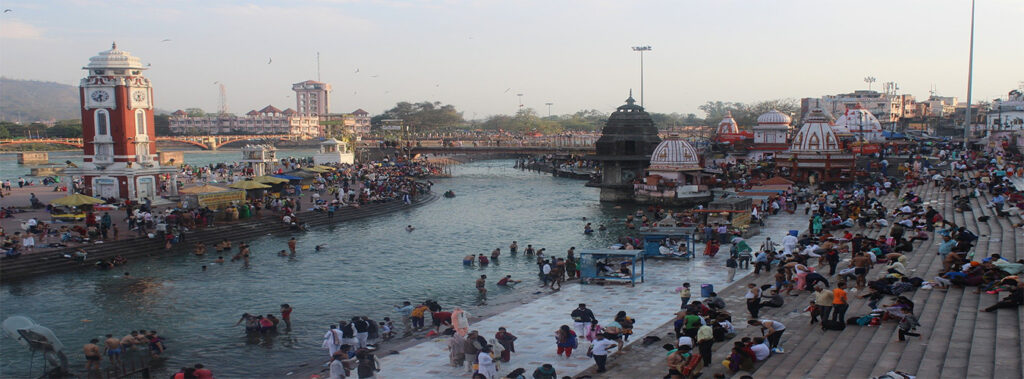
Uttarakhand, formerly known as Uttaranchal, is a state in the northern part of India. It is often referred to as the “Devabhumi” (literally “Land of the Gods”) due to numerous Hindu temples and pilgrimage centres found throughout the state. Uttarakhand is known for the natural environment of the Himalayas, the Bhabar and the Terai regions.

The Char Dham Yatra begins around the first to second week of May every year. These dates are announced in the national media. The base for the yatra is generally the Rishikesh town which has all the amenities available for pilgrims and tourists alike. Pilgrims and tourists generally book their journey through the local travel agents to all the four locations.

The Kumaon region of uttarakhand is home to several freshwater lakes. Most of these lakes are situated in Nainital district, due to which, Nainital is also known as the Lake district of India, and four of them – Nainital, Bhimtal, Naukuchiatal and Sattal (which is a collection of seven different lakes viz Purna Tal, Ram Tal, Sita Tal, Laxman Tal, Nal Damayanti Tal, Sukha Tal and Garud Tal) are under restoration with funds provided by the National Lake Conservation Plan (NLCP) of the Government of India. Other prominent lakes in the region include Khurpatal, Sariyatal and Kamaltal.

Uttarakhand is home to the Jim Corbett National Park, the first national park in India. There are 12 National Parks and Wildlife Sanctuaries covering 13.8 percent of the total area of the state. Nanda Devi Biosphere reserve and Valley of Flowers National Park are UNESCO World Heritage sites.

There are many local food items that are quite popular in Uttarakhand. The local communities of Garhwalis and Kumaonis have their traditional dishes that are quite famous amongst travelers who are exploring about the state. While in Uttarakhand, one should try food items like Kafuli, Bhang Ki Chutney, Garhwal ka Fannah, Phaanu, Baadi, Kandalee Ka Saag, Chainsoo, and Kumaoni Raita.

Tourism in Uttarakhand is all about perilous pleasures. The state of Uttarakhand seems to have holiest of holy Hindu pilgrimages, silky meadows on treeless hills, snow-covered mountains towering above glacial lakes, and Raj-era hill stations. Lofty mountains, quaint hamlets, unspoilt culture, and clear night skies will make you want to linger a little longer in Uttarakhand. A bevy of tourist attractions in Uttarakhand can make your vacation of any duration worthwhile.

Rajasthan

Rajasthan, the ‘Land of Kings’)[8] is a state in northern India. It is the largest Indian state by area and the seventh largest by population. Rajasthan is located on the northwestern side of India, where it comprises most of the wide and inhospitable Thar Desert (also known as the “Great Indian Desert”). The capital city is Jaipur, in the east-central part of the state.

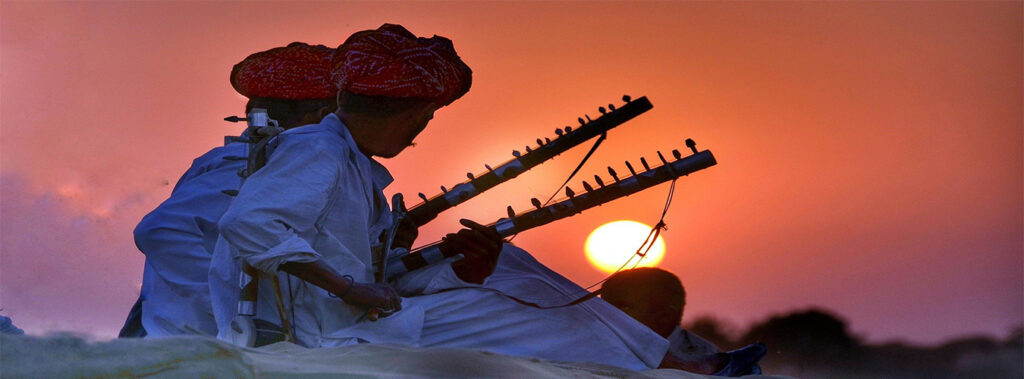
Rajasthan is culturally rich and has artistic and cultural traditions that reflect the ancient Indian way of life. There is rich and varied folk culture from villages which are often depicted as a symbol of the state. Highly cultivated classical music and dance with its own distinct style is part of the cultural tradition of Rajasthan. The music has songs that depict day-to-day relationships and chores, often focused around fetching water from wells or ponds.

Rajasthani cooking was influenced by both the war-like lifestyles of its inhabitants and the availability of ingredients in this arid region. Food that could last for several days and could be eaten without heating was preferred. Dal-Bati-Churma is very popular in Rajasthan. The traditional way to serve it is to first coarsely mash the Baati, and then pour pure ghee on top of it. It is served with the daal (lentils) and spicy garlic chutney. Also served with besan (gram flour) ki kadi. It is commonly served at all festivities, including religious occasions, wedding ceremonies, and birthday parties in Rajasthan.

The Ghoomar dance from Jaipur, Jodhpur, and Kalbelia of the Kalbelia tribe have gained international recognition. Folk music is a large part of the Rajasthani culture. The Manganiyar and Langa communities from Rajasthan are notable for their folk music.

Rajasthan is known for its traditional, colorful art. The block prints, tie and dye prints, Gota Patti (main), Bagaru prints, Sanganer prints, and Zari embroidery are major export products from Rajasthan. Handicraft items like wooden furniture and crafts, carpets, and blue pottery are commonly found here. Shopping reflects the colorful culture, Rajasthani clothes have a lot of mirror work and embroidery.

Rajasthan is home to attractions for domestic and foreign travellers, including the forts and palaces of Jaipur, lakes of Udaipur, Temples of Rajsamand and Pali, sand dunes of Jaisalmer and Bikaner, Havelis of Mandawa and Fatehpur, Rajasthan, wildlife of Sawai Madhopur, the scenic beauty of Mount Abu, tribes of Dungarpur and Banswara, and the cattle fair of Pushkar.

North East

Northeast India, is the easternmost region of India representing both a geographic and political administrative division of the country. It comprises eight states – Arunachal Pradesh, Assam, Manipur, Meghalaya, Mizoram, Nagaland, Tripura and Sikkim.

States in the North Eastern Region are well connected by air-transport conducting regular flights to all major cities in the country. The states also own several small airstrips for military and private purposes which may be accessed using Pawan Hans helicopter services. The region currently has two international airports viz. Lokapriya Gopinath Bordoloi International Airport, Bir Tikendrajit International Airport Maharaja Bir Bikram Airport conducting flights to Thailand, Myanmar, Nepal and Bhutan. While the airport in Sikkim is under-construction, Bagdogra Airport (IATA: IXB, ICAO: VEBD) remains the closest domestic airport to the state.

The eight states of North East India are blessed with scenic natural beauty, salubrious weather, rich biodiversity, rare wild life, historical sites, distinct cultural and ethnic heritage and warm and welcoming people. The region offers unforgettable visits for tourists interested in wild life, religious, cultural and ethnic tourism, river cruises, golf and a host of others. There is also great scope for mountaineering, trekking and adventure tourism in the region.

Northeast of India is home to many wildlife sanctuaries like Kaziranga National Park famous for the one horned rhinoceros, Manas National Park, Nameri, Orang, Dibru Saikhowa in Assam, Namdhapha in Arunachal Pradesh, Balpakram in Meghalaya, Keibul Namjao in Manipur, Intanki in Nagaland, Khangchendzonga in Sikkim. The mighty Brahmaputra flows through the length of Assam where tourists can enjoy memorable river cruises and the flowing rivers of Arunachal Pradesh which feed the Brahmaputra offering incredible white water rafting experiences.

Must visit places in North East India region:
Arunachal Pradesh: Tawang, Ziro, Sela Pass, Bomdila etc.
Assam: Kaziranga National Park, Kamakhya Temple, Brahmaputra River
Manipur: Loktak Lake, Moirang, Khwairamband Bazar/ Ima Market
Meghalaya: Shillong, Cherrapunji, Mawlynnong, Dawki, Mawphlang Sacred Grove
Mizoram: Aizawl, Thenzawl, Hmuifang, Vantawng Falls
Nagaland: Khonoma, Wokha, Pfutsero, Mokokchung
Sikkim: Gangtok, Changu Lake, Rumtek, Aritar
Tripura: Ujjayanta Palace, Tripura Sundari Temple, Rudrasagar Lake, Unakoti

Ladakh

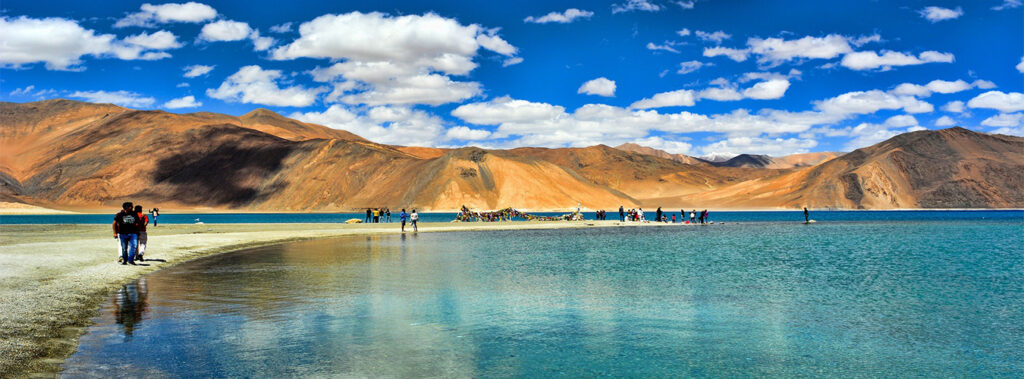
Ladakh is a region administered by India as a union territory, and constitutes a part of the larger Kashmir region, which has been the subject of dispute between India, Pakistan, and China since 1947. Ladakh became a Union Territory on 31st of October 2019. Ladakh is renowned for its remote mountain beauty and distinct culture.

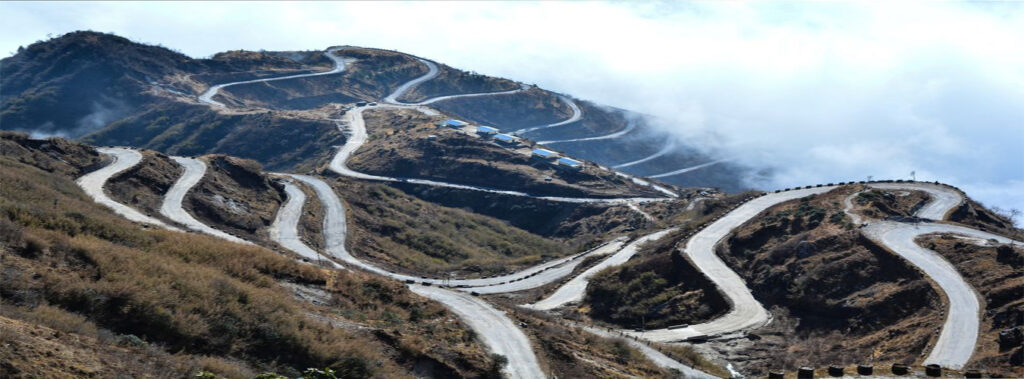
The two roads into the area from outside are the Zoji-La Pass and Kargil route from Srinagar District in the Kashmir Valley, and the high altitude Manali-Leh Highway from Himachal Pradesh. The Manali-Leh road is open only from May or June to October or November when snow is cleared from several passes. The Srinagar-Leh road is open from April or May to November or December and is generally blocked by snow through the winter only at Zoji La Pass.

Kushok Bakula Rimpochee Airport at Leh has flights from Delhi year-round on Jet Airways, Vistara, GoAir, and Air India. Air India also operates weekly flights to Jammu and Srinagar.

Roads within Ladakh, except to Zangskar, are open all year round. Khardong-La Pass to Nubra can get closed by snow for several days in winter and spring. Chang-La pass to Pangong Lake rarely closes.

No special permit is required to visit most of Ladakh, including Leh and Kargil towns. Permits are required for all tourists to visit the “Inner Line” areas, i.e. Nubra Valley; Panggong Lake and the Durbuk Block that it lies in (i.e. north of the Changla Pass); Tso-Moriri and Tsokar Lakes and the area along the Indus River east of Upshi; and Dha-hanu and the area along the Indus River northwest of Khalatse.

Permits are not available for foreigners to go to the far reaches of each of the areas close to the borders (or Line of Control, etc.) with Pakistan and China. For example, foreigners can go to the edge of Panggong Lake and Maan and Merak villages, but not along the edge of it to Phobrang or Chushul villages; they cannot proceed east up the Indus from the Mahe Bridge; and in Nubra, they can only go as far as Panamik to the north and Turtuk to the west.

Kerala

Spread over 38,863 sq. km (15,005 sq mi), Kerala is the twenty-first largest Indian state by area. It is bordered by Karnataka to the north and northeast, Tamil Nadu to the east and south, and the Lakshadweep Sea to the west. With 33,406,061 inhabitants as per the 2011 Census, Kerala is the thirteenth-largest Indian state by population. It is divided into 14 districts with the capital being Thiruvananthapuram. Malayalam is the most widely spoken language and is also the official language of the state.

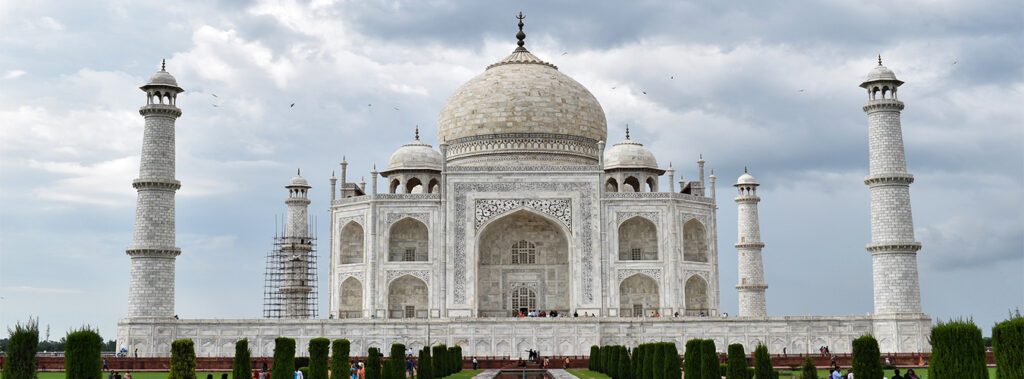
Kerala’s culture and traditions, coupled with its varied demographics, have made the state one of the most popular tourist destinations in India. In 2012, National Geographic’s Traveller magazine named Kerala as one of the “ten paradises of the world” and “50 must see destinations of a lifetime”. Travel and Leisure also described Kerala as “One of the 100 great trips for the 21st century”. In 2012, it overtook the Taj Mahal to be the number one travel destination in Google’s search trends for India. CNN Travel listed Kerala amongst its ’19 best places to visit in 2019′.

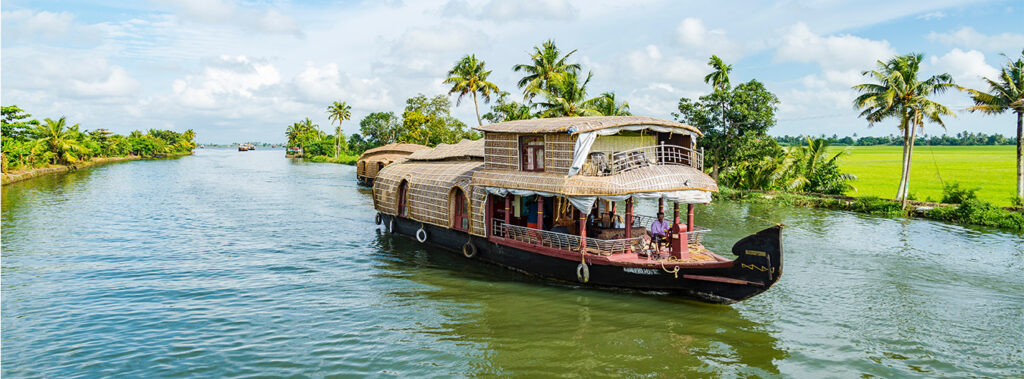
Kerala’s beaches, backwaters, lakes, mountain ranges, waterfalls, ancient ports, palaces, religious institutions and wildlife sanctuaries are major attractions for both domestic and international tourists. The city of Kochi ranks first in the total number of international and domestic tourists in Kerala.

Many advertisements branded Kerala with the tagline Kerala, God’s Own Country. Kerala tourism is a global brand and regarded as one of the destinations with highest recall.

Ayurvedic tourism has become very popular since the 1990s, and private agencies have played a notable role in tandem with the initiatives of the Tourism Department. Kerala is known for its ecotourism initiatives which include mountaineering, trekking and bird-watching programmes in the Western Ghats as the major activities.

The major beaches are at Kovalam, Varkala, Kozhikode, Fort Kochi, Cherai, Alappuzha, Ponnani, Kadalundi, Tanur, Chaliyam, Payyambalam, Kappad, Muzhappilangad and Bekal. Popular hill stations are at Ponmudi, Wayanad, Wagamon, Munnar, Peermade, Ramakkalmedu, Arimbra, Paithalmala of Kannur district, Kodikuthimala, and Nelliampathi.[656] Munnar is 4,500 feet above sea level and is known for tea plantations, and a variety of flora and fauna.[657] Kerala’s ecotourism destinations include 12 wildlife sanctuaries and two national parks: Periyar Tiger Reserve, Parambikulam Wildlife Sanctuary, Chinnar Wildlife Sanctuary, Thattekad Bird Sanctuary, Wayanad Wildlife Sanctuary, Kadalundi Bird Sanctuary, Karimpuzha Wildlife Sanctuary, Muthanga Wildlife Sanctuary, Aralam Wildlife Sanctuary, Eravikulam National Park, and Silent Valley National Park are the most popular among them.[658] The Kerala backwaters are an extensive network of interlocking rivers (41 west-flowing rivers), lakes, and canals that centre around Alleppey, Kumarakom, Ponnani, Nileshwaram, and Punnamada (where the annual Nehru Trophy Boat Race is held in August), Pathiramanal a small island in Muhamma. Padmanabhapuram Palace and the Mattancherry Palace are two nearby heritage sites. Padmanabhaswamy Temple in the state capital of Thiruvananthapuram holds the record as the wealthiest place of worship in the world, with assets of at least ₹1.2 trillion (equivalent to ₹2.0 trillion or US$28 billion in 2019).


Kashmir

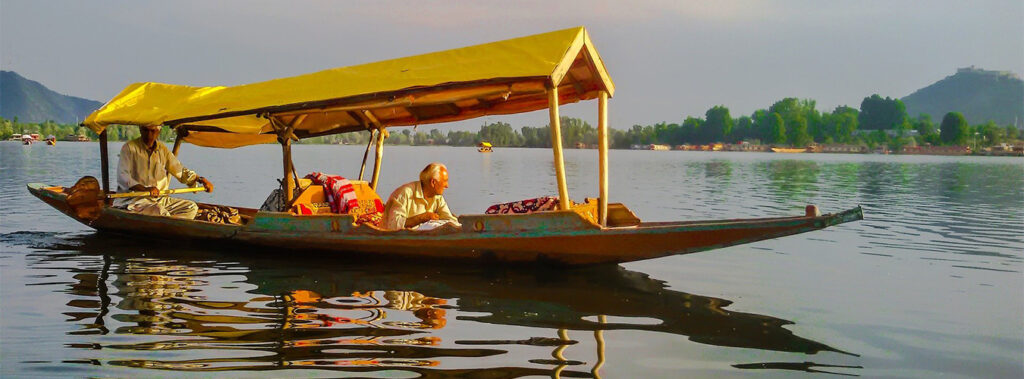
Jammu and Kashmir is home to several valleys such as the Kashmir Valley, Chenab Valley, Sindh Valley and Lidder Valley. Some major tourist attractions in Jammu and Kashmir are Srinagar, the Mughal Gardens, Gulmarg, Pahalgam, Patnitop and Jammu. Every year, thousands of Hindu pilgrims visit holy shrines of Vaishno Devi and Amarnath which has had significant impact on the state’s economy.

Kashmir Valley is one of the top tourist destinations of India. Gulmarg, one of the most popular ski resort destinations in India, is also home to the world’s highest green golf course. Jammu and Kashmir is also famous for its scenic beauty, flower gardens, apple farms and more. It attracts tourists for its unique handicrafts and the world-famous Kashmiri Shawls.

Kashmir has four distinct seasons, each with its own peculiar character and distinctive charm. These are spring, summer, autumn and winter. Spring, which extends roughly from March to early May, is when a million blossoms carpet the ground. The weather during this time can be gloriously pleasant at 23oC or chilly and windy at 6o C. This is the season when Srinagar experiences rains, but the showers are brief. Summer extends from May until the end of August. Light woolens may be required to wear out of Srinagar. In higher altitudes night temperatures drop slightly. Srinagar at this time experiences day temperatures of between 25oC and 35oC.

The onset of Autumn, perhaps Kashmir’s loveliest season, is towards September, when green turns to gold and then to russet and red. The highest day temperatures in September are around 23oC and night temperatures dip to 10oC by October, and further drop by November, when heavy woolens are essential.

Through December, to the beginning of March is Winter time, which presents Srinagar in yet another mood. Bare, snow-covered landscapes being watched from beside the warmth of a fire is a joy that cannot be described to anyone who has not experienced it. Some houseboats and hotels remain open in winter-these are either centrally heated or heated with “bukharis”, a typically Kashmiri stove kept alight with embers of wood, quite effective in the winter.

The state of Jammu and Kashmir has become a great tourist destination because it has developed and taken care of its uniqueness in a perfect manner. “Paradise on the Earth” the state is world famous for its scenic splendour, snow-capped mountains, plentiful wildlife, hospitable people and local handicraft.

In addition to its variety of fruits and flowers, scenes and sights, the choice of varied climate that its hills and meadows offer, there are several opportunities for games and sports.
One can do boating, skiing, skating, mountaineering, horse riding Etc. One can indulge in fishing, hunting wild animals, catching birds, shooting ducks and other kinds of sports.

The Jammu and Kashmir Government extends all kinds of facilities to tourists: It has opened its branches at various important stations to supply information and give help to those who intend planning a holiday in Kashmir.

Karnataka

Karnataka is a state in the south western region of India. It is the largest state in South India and sixth largest in India. Its capital and largest city is Bangalore. Karnataka is bordered by the Arabian Sea to the west, Goa to the northwest, Maharashtra to the north, Telangana to the northeast, Andhra Pradesh to the east, Tamil Nadu to the southeast, and Kerala to the south. It is the only southern state to have land borders with all of the other 4 southern Indian sister states.

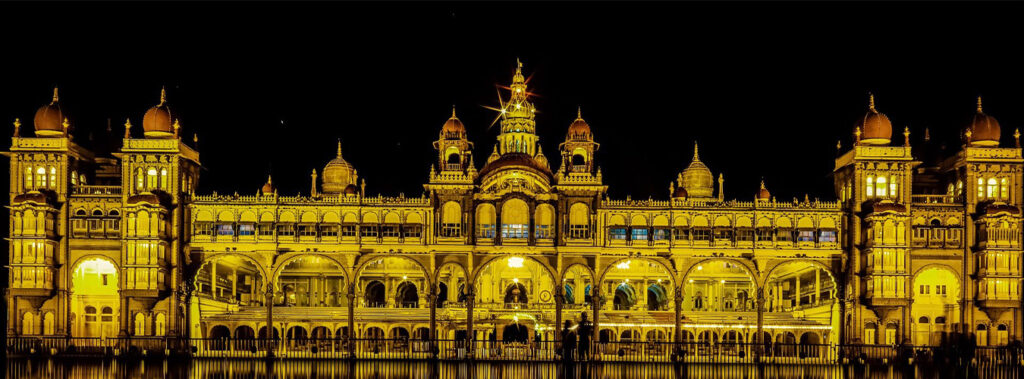
By virtue of its varied geography and long history, Karnataka hosts numerous spots of interest for tourists. There is an array of ancient sculptured temples, modern cities, scenic hill ranges, forests and beaches. Karnataka has been ranked as the fourth most popular destination for tourism among the states of India. Karnataka has the second highest number of nationally protected monuments in India, second only to Uttar Pradesh,[158] in addition to 752 monuments protected by the State Directorate of Archaeology and Museums. Another 25,000 monuments are yet to receive protection.

The districts of the Western Ghats and the southern districts of the state have popular eco-tourism locations including Kudremukh, Madikeri and Agumbe. Karnataka has 25 wildlife sanctuaries and five national parks. Popular among them are Bandipura National Park, Bannerghatta National Park and Nagarhole National Park. The ruins of the Vijayanagara Empire at Hampi and the monuments of Pattadakal are on the list of UNESCO’s World Heritage Sites. The cave temples at Badami and the rock-cut temples at Aihole representing the Badami Chalukyan style of architecture are also popular tourist destinations. The Hoysala temples at Beluru and Halebidu, which were built with Chloritic schist (soapstone) are proposed UNESCO World Heritage sites. The Gol Gumbaz and Ibrahim Rauza are famous examples of the Deccan Sultanate style of architecture. The monolith of Gomateshwara Bahubali at Shravanabelagola is the tallest sculpted monolith in the world, attracting tens of thousands of pilgrims during the Mahamastakabhisheka festival.

Several popular beaches dot the coastline, including Murudeshwara, Gokarna, Malpe and Karwar. In addition, Karnataka is home to several places of religious importance. Several Hindu temples including the famous Udupi Sri Krishna Matha, the Marikamba Temple at Sirsi, the Kollur Mookambika Temple, the Sri Manjunatha Temple at Dharmasthala, Kukke Subramanya Temple, Janardhana and Mahakali Temple at Ambalpadi, Sharadamba Temple at Shringeri attract pilgrims from all over India. Most of the holy sites of Lingayatism, like Kudalasangama and Basavana Bagewadi, are found in northern parts of the state. Shravanabelagola, Mudabidri and Karkala are famous for Jain history and monuments. Jainism had a stronghold in Karnataka in the early medieval period with Shravanabelagola as its most important centre. The Shettihalli Rosary Church near Shettihalli, an example of French colonial Gothic architecture, is a rare example of a Christian ruin, is a popular tourist site.

Himachal

Himachal Prades, the land of “Snowcapped” & “Unmoving” thus, describing the “Snowladen Mountains province”)[16] is a state in the northern part of India. Situated in the Western Himalayas, it is one of the eleven mountain states and is characterized by an extreme landscape featuring several peaks and extensive river systems. Himachal Pradesh shares borders with the union territories of Jammu and Kashmir and Ladakh to the north, and the states of Punjab to the west, Haryana to the southwest, and Uttarakhand and Uttar Pradesh to the south.

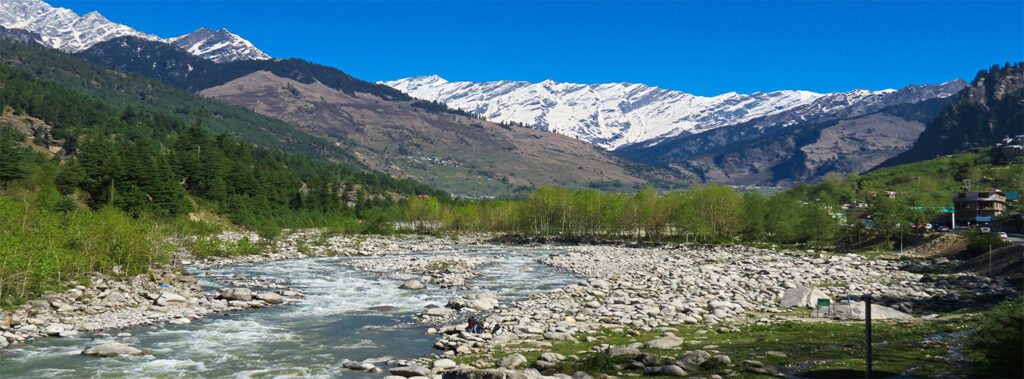
Tourism in Himachal Pradesh is a major contributor to the state’s economy and growth. The Himalayas attracts tourists from all over the world. Hill stations like Shimla, Manali, Dharamshala, Dalhousie, Chamba, Khajjiar, Kullu and Kasauli are popular destinations for both domestic and foreign tourists. The state also has many important Hindu pilgrimage sites with prominent temples like Naina Devi Temple, Bajreshwari Mata Temple, Jwala Ji Temple, Chintpurni, Chamunda Devi Temple, Baijnath Temple, Bhimakali Temple, Bijli Mahadev and Jakhoo Temple. Manimahesh Lake situated in the Bharmour region of Chamba district is the venue of an annual Hindu pilgrimage trek held in the month of August which attracts lakhs of devotees. The state is also referred to as “Dev Bhoomi” (literally meaning Abode of Gods) due to its mention as such in ancient Hindu texts and occurrence of a large number of historical temples in the state.

Himachal is also known for its adventure tourism activities like ice skating in Shimla, paragliding in Bir Billing and Solang valley, rafting in Kullu, skiing in Manali, boating in Bilaspur and trekking, horse riding and fishing in different parts in the state. Shimla, the state’s capital, is home to Asia’s only natural ice-skating rink.

Spiti Valley in Lahaul and Spiti District situated at an altitude of over 3000 metres with its picturesque landscapes is an important destination for adventure seekers. The region also has some of the oldest Buddhist Monasteries in the world.

Himachal hosted the first Paragliding World Cup in India from 24 to 31 October in 2015. The venue for the paragliding world cup was Bir Billing, which is 70 km from the tourist town Macleod Ganj, located in the heart of Himachal in Kangra District. Bir Billing is the centre for aero sports in Himachal and considered as best for paragliding. Buddhist monasteries, trekking to tribal villages and mountain biking are other local possibilities.

Delhi

Delhi, officially the National Capital Territory (NCT) of Delhi, is a city and a union territory of India containing New Delhi, the capital of India. It is bordered by the state of Haryana on three sides and by Uttar Pradesh to the east.

Delhi is one of the oldest cities in the world, and has been continuously inhabited since the 6th century BCE. Through most of its history, Delhi has served as a capital of various kingdoms and empires, most notably the Pandavas, the Tomars, the Delhi Sultanate and the Mughals. The city has been captured, ransacked and rebuilt several times, particularly during the medieval period, and modern Delhi is a cluster of a number of cities spread across the metropolitan region. For many centuries Delhi has been a dominant trading and commercial centre in northern India, and since the 1990s it has emerged as an important node in the international corporate and financial network.

According to Euromonitor International, Delhi ranked as 28th-most visited city in the world and first in India by foreign visitors in 2015. There are numerous tourist attractions in Delhi, both historic and modern. The three UNESCO World Heritage Sites in Delhi, Qutb Complex, Red Fort and Humayun’s Tomb are among the finest examples of Indo-Islamic architecture. Another prominent landmark of Delhi is India Gate, a 1931 built war memorial to soldiers of British Indian Army who died during First World War. Delhi has several famous places of worship of various religions. One of the largest Hindu temple complexes in the world, Akshardham is a major tourist attraction in the city. Other famous religious sites include Lal Mandir, Laxminarayan Temple, Gurudwara Bangla Sahib, Lotus Temple, Jama Masjid and ISKCON Temple.

Delhi is also a hub for shopping of all kinds. Connaught Place, Chandni Chowk, Sarojini Nagar, Khan Market and Dilli Haat are some of the major retail markets in Delhi. Major shopping malls include Select Citywalk, Pacific Mall, DLF Promenade, DLF Emporio, Metro Walk and Ansal Plaza.

GOA

Goa is a state on the southwestern coast of India within the region known as the Konkan, and geographically separated from the Deccan highlands by the Western Ghats. It is surrounded by the Indian states of Maharashtra to the north and Karnataka to the east and south, with the Arabian Sea forming its western coast. It is India’s smallest state by area and its fourth-smallest by population.

Panaji is the state’s capital, while Vasco da Gama is its largest city. The historic city of Margão in Goa still exhibits the cultural influence of the Portuguese, who first voyaged to the subcontinent in the early 16th century as merchants, and conquered it soon thereafter, whereupon Goa became an overseas territory of the Portuguese Empire, part of what was then known as Portuguese India, and remained as such for about 450 years, until it was annexed by India in 1961. Goa’s official language, which is spoken by a majority of its inhabitants, is Konkani.

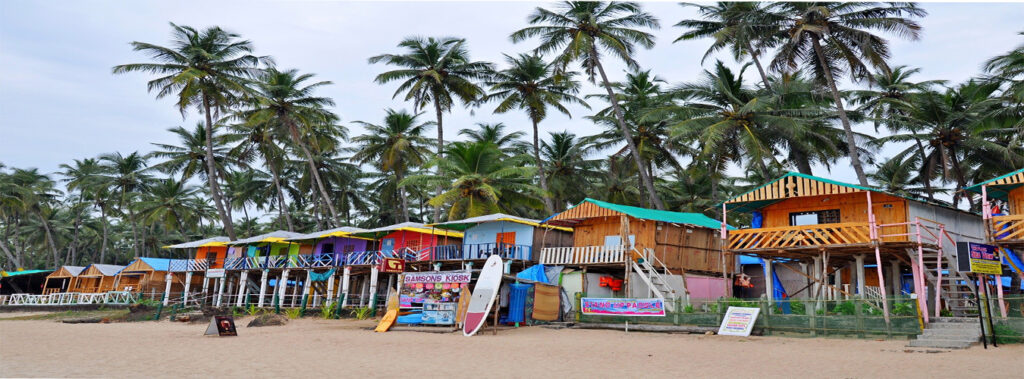
Tourism is generally focused on the coastal areas of Goa, with lower tourist activity inland. In 2010, there were more than 2 million tourists reported to have visited Goa, about 1.2 million of whom were from abroad. As of 2013, Goa was a destination of choice for Indian and foreign tourists, particularly Britons and Russians, with limited means who wanted to party. The state was hopeful that changes could be made which would attract a more upscale demographic.

Goa stands 6th in the Top 10 Nightlife cities in the world in National Geographic Travel. Notable nightclubs in Goa include Chronicle, Mambos and Sinq.

One of the biggest tourist attractions in Goa is water sports. Beaches like Baga and Calangute offer jet-skiing, parasailing, banana boat rides, water scooter rides, and more. Patnem beach in Palolem stood third in CNN Travel’s Top 20 Beaches in Asia.
Over 450 years of Portuguese rule and the influence of the Portuguese culture presents to visitors to Goa a cultural environment that is not found elsewhere in India. Goa is often described as a fusion between Eastern and Western culture with Portuguese culture having a dominant position in the state be it in its architectural, cultural or social settings. The state of Goa is famous for its excellent beaches, churches, and temples. The Bom Jesus Cathedral, Fort Aguada and a new wax museum on Indian history, culture and heritage in Old Goa are other tourism destinations.

Goa has two World Heritage Sites: the Bom Jesus Basilica and churches and convents of Old Goa. The basilica holds the mortal remains of St. Francis Xavier, regarded by many Catholics as the patron saint of Goa (the patron of the Archdiocese of Goa is actually Saint Joseph Vaz). These are both Portuguese-era monuments and reflect a strong European character. The relics are taken down for veneration and for public viewing, per the prerogative of the Church in Goa, not every ten or twelve years as popularly thought and propagated. The last exposition was held in 2014.

Andaman and Nicobar Islands

The Andaman Islands are an archipelago in the northeastern Indian Ocean about 130 km (81 mi) southwest offs the coasts of Myanmar’s Ayeyarwady Region. Together with the Nicobar Islands to their south, the Andamans serve as a maritime boundary between the Bay of Bengal to the west and the Andaman Sea to the east. Most of the islands are part of the Andaman and Nicobar Islands, a Union Territory of India, while the Coco Islands and Preparis Island in the archipelago’s north belong to Myanmar.

The Andaman Islands are home to the Andamanese, a group of indigenous people that includes a number of tribes, including the Jarawa and Sentinelese tribes. While some of the islands can be visited with permits, entry to others, including North Sentinel Island, is banned by law. The Sentinelese are generally hostile to visitors and have had little contact with any other people. The government protects their right to privacy.

Andaman and Nicobar Islands is a union territory of India consisting of 572 islands, of which 38 are inhabited, at the junction of the Bay of Bengal and the Andaman Sea. The territory’s capital is the city of Port Blair.

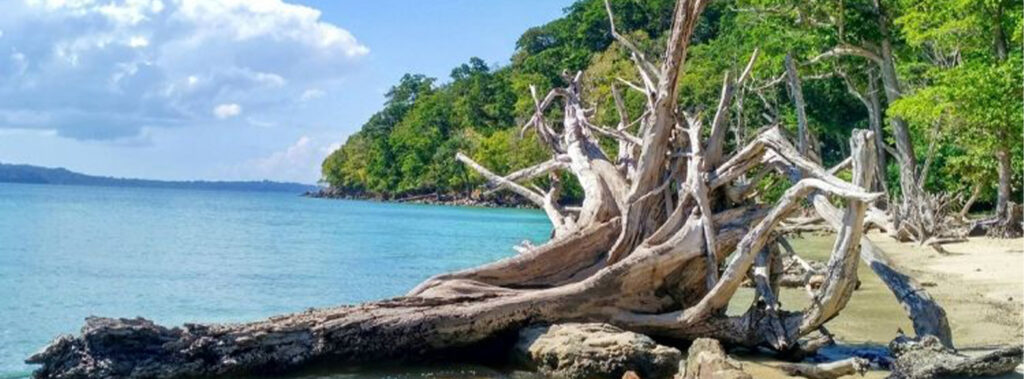
Tourism to the Andaman and Nicobar Islands is increasing due to the popularity of beaches and adventure sports like snorkelling and sea-walking. Plans to develop various islands under NITI (National Institute of Transforming India) Aayog is also in progress. Luxury resorts with participation from the Government are set up to plan in Avis Island, Smith Island and Long Island.

In Port Blair, the main places to visit are the Cellular Jail, Mahatma Gandhi Marine National Park, Andaman Water sports complex, Chatham Saw Mill, Mini Zoo, Corbyn’s cove, Chidiya Tapu, Wandoor Beach, Forest Museum, Anthropological Museum, Fisheries Museum, Naval Museum (Samudrika), Ross Island and North Bay Island. Viper Island which was earlier visited is now kept closed by the administration. Other places include Havelock island famous for Radhanagar Beach, Neil Island for Scuba diving/snorkeling/sea walking, Cinque Island, Saddle peak, Mt Harriet, and Mud Volcano. Diglipur, located at North Andaman is also getting popular in 2018 and many tourists have started visiting North Andaman as well. The southern group (Nicobar islands) is mostly inaccessible to tourists.

Indian tourists do not require a permit to visit the Andaman Islands, but if they wish to visit any tribal areas they need a special permit from the Deputy Commissioner in Port Blair. Permits are required for foreign nationals. For foreign nationals arriving by air, these are granted upon arrival at Port Blair.

According to official estimates, the flow of tourists tripled to nearly 430,000 in 2016-17 from 130,000 in 2008–09. The Radha Nagar beach was chosen as Asia’s best beach in 2004.

Copyrights © 2026 Travel & Leisure. All Rights Reserved